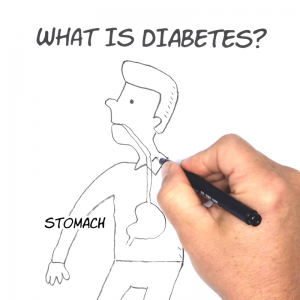
What is diabetes?
Diabetes is a condition characterised by an inability of the body to regulate blood sugar levels.
When food that contains carbohydrates, e.g. bread, rice, pasta, potatoes, fruit and/or dairy products enter the body, the stomach starts to break them down to sugar, also known as glucose.
Sugar travels from the stomach through the bloodstream to muscles and fat cells. But here's the catch, sugar can’t enter the cells without the help of a hormone called insulin, which is produced by the pancreas.
Insulin acts like a key to open the cells for sugar. The cells then can use sugar as fuel in order to generate energy for the body. When this process is working correctly, sugar is able to exit the bloodstream at the cells. This keeps the amount of sugar in the blood at a normal level between 4 and 7 millimoles per litre.
When the pancreas is not producing enough insulin to compensate for the amount of sugar entering the bloodstream, or if the cells cannot respond to the insulin produced by the pancreas, the blood sugar levels start to rise within the bloodstream. This means the body is not getting the energy it needs which results in fatigue.
The body can also start to try to dilute the sugar in the bloodstream with fluid it pulls from the cells that can lead to feeling dehydrated and thirsty all the time.
More time spent in target range can reduce the risk of developing complications. Depending on the diabetes type and the disease progression, this can be achieved in different ways.
What is diabetes? (video 1)